

Filter und Sortierung
Bewertungen Henzen

Zoals altijd snelle levering. Produkt als omschreven. Topverkoper!
ik ben heel tevreden keurig geleverd en goede kwaliteit
Nice coin. Well packaged. Good accompanying description.
Excellent!
MA-ID: 8792502010
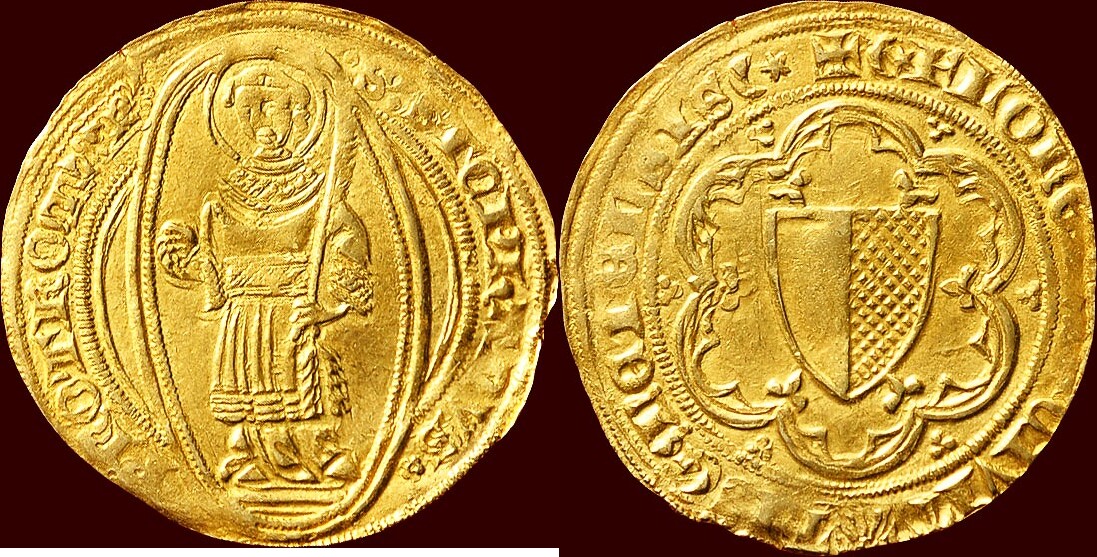
Florin FRANCE - CITY OF METZ - d′or n.d. ♦ a rare medieval historical coin of a fine style ♦

1650,00 EUR
Differenzbesteuert
zzgl. 18,00 EUR Versand ( nach Deutschland )
Lieferzeit: 5 - 8 Tage*
zzgl. 18,00 EUR Versand ( nach Deutschland )
| Bestellhotline +49 (0)2871 2180 383 |
| Zahlungsarten |
| Überweisung |
♦ a rare medieval historical coin of a fine style ♦ | Abkürzungen
23,00 mm
weight 3,46gr. gold Ø 23mm.
Third type
mintmark ☾⋆ (crescent and star)
obv. Saint Stephen, standing left, wreathed, in a mandorla,
holding a palm leaf in his left hand, intersecting the legend above
and below, within plain and reeded circle, surrounded by the legend
•S′•STЄPhANVS✿ - PROThOMAR′•
rev. Shield of Metz in a fleur-de-lis polylobe contained in a hexalobe
confined to the angles of a ringlet within reeded circle, surrounded by
the legend ✿ ☾⋆FLORЄNVS⋆CIVITIS⋆MЄTЄNSIS ☾⋆
Metz, Verdun and Toul were attached to the kingdom of France by the Treaty of Cateau-Cambrésis in 1559. Nevertheless, until the Treaty of Westphalia in 1648, the Habsburgs disputed and discussed the possession of the Three Bishoprics. Metz, during this period, sometimes maintains difficult relations with its Lorraine or French neighbors. The city is favorable to the League during the Wars of Religion.
The Metz Florin
Belongs to the grand tradition of gold coins inspired by the Florentine florin, a major monetary standard in medieval Europe. By adopting this prestigious coin type, the City of Metz affirmed its economic dynamism and its ability to integrate into the major European trade networks. Struck in high-quality gold, the Metz florin was intended for high-value exchanges, international commercial transactions, and institutional payments. Its iconography, directly inspired by Italian models, testifies to the influence of major trading centers and Metz′s openness to transalpine economic networks. The issuance of the florin by the City of Metz illustrates its monetary autonomy and its strategic role as a free imperial city. This gold coin conferred enhanced financial credibility upon Metz, facilitating trade with the most important merchants and commercial centers of the time. The minting of the gold florin of the city of Metz began at the end of the 14th century. It is first mentioned on 13 February 1384, at a rate of 11 sous, then on 20 August 1394, at a rate of 10 sous and 5 deniers. The first type, which has not been found, depicted the image of Saint Stephen seated. A second type, known only from a 19th-century drawing, showed the saint kneeling between two escutcheons. The third type, which was subsequently retained, is described in the treaty concluded on 17 June 1415, between the city and its mint master, Colin de Malines: on which florin should the image of Saint Stephen, first martyr, standing upright, be on one side, and the emblem of our City of Metz on the other. Its value was fixed at 11 sous in 1420, 13 sous in 1434 and 12 sous in 1439. It was to be exchanged for 10 silver gros in 1461 (Flon p. 516).
♦ a rare medieval historical coin of a fine style ♦
Boudeau 1657 | Wendling II/F/P/2 | Flon 517, 2
coll. Robert 739 | Friedberg 164 R
Some very minor flaws, otherwise very attractive specimen with fine details.
vf/xf à xf-
Bitte beachten Sie unsere Mindestabnahme von 20 Euro. Sendungen nach China sind auf Gefahr des Käufers und nur Zahlung per banküberweisung. An PayPal und Kreditkarte Zahlungen sind immer Verwaltungs- und Risikokosten verbunden. Sendungen nach Russland, Ukraine und israel sind nicht möglich. Der Versand erfolgt innerhalb von 5 Tagen nach Zahlungseingang. BITTE KEIN PAYPAL ODER KREDITKARTE ZAHLUNGEN FÜR EU. Zahlen Sie bitte immer nur mit IBAN; schnell, billig und zuverlässich.
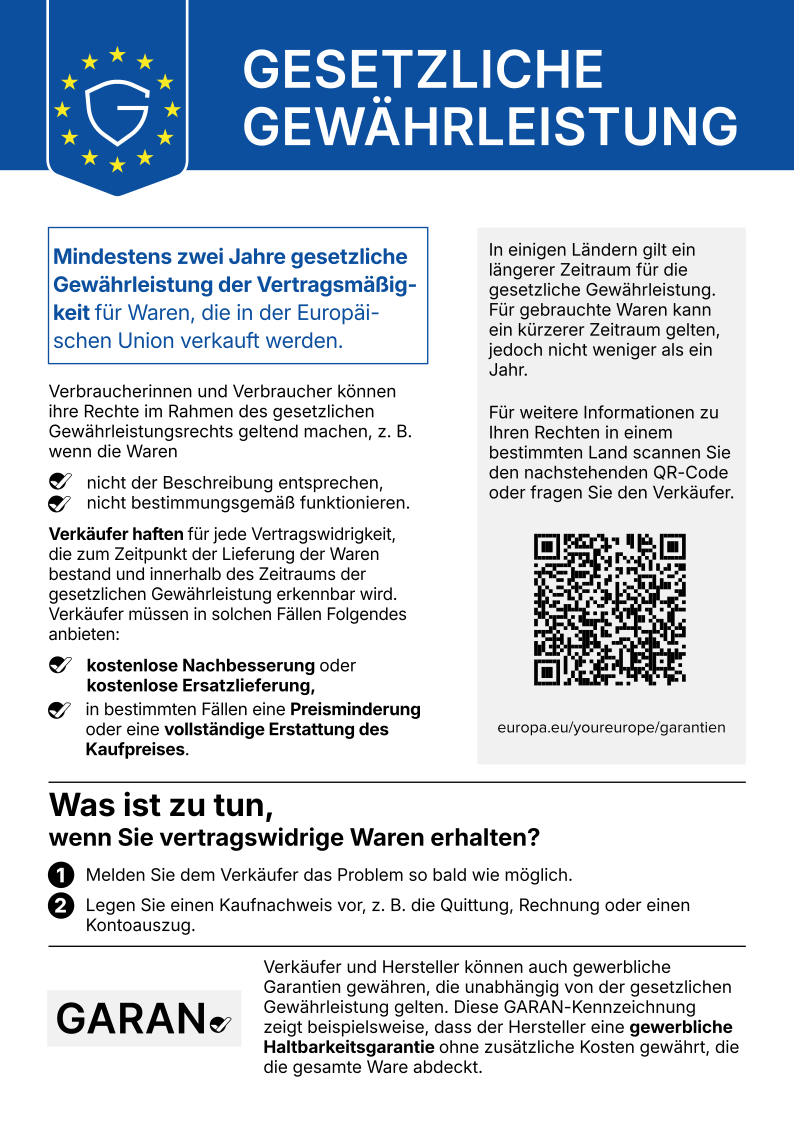

Informationen zum Kauf bei MA-Shops
Bestellungen bei MA-Shops sind jederzeit möglich und werden innerhalb von 2-4 Arbeitstagen verschickt.
Ein über die MA-Shops abgesicherter Kauf findet niemals außerhalb von MA-Shops statt.
Bestellen Sie sicher online mit dem MA-Shops Warenkorb.
Vielen Dank.
Ein über die MA-Shops abgesicherter Kauf findet niemals außerhalb von MA-Shops statt.
Bestellen Sie sicher online mit dem MA-Shops Warenkorb.
Vielen Dank.
|
Vertrag widerrufen Verkäufer-Startseite | 0Warenkorb | AGB | Impressum | MA AGB | Datenschutzerklärung | Garantie | MA-Shops Neuzugänge Copyright ® 2001-2026, MA-SHOPS Muenzen All Rights Reserved. Designated trademarks and brands are the property of their respective owners. |