

MA-ID: 8674102010
Bewertungen Henzen

Perfect!
Tip-Top Danke
Iedere aankoop dik in orde. Graag tot een volgende keer.
Lot déjà reçu. Envoi impeccable, pièces conformes à la description et en ex...
AV Solidus 832-839 n. Chr. ITALY - PRINCIPIALITY OF THE LOMBARDS - THE DUCHY OF BENEVENTUM - SICARD, 832-839 - Benevento xf-

Munthandel G.Henzen 
11
Seit 11 Jahren bei MA-Shops
8009 Bewertungen,
100 % Positiv (seit 24 Monaten)
Weltweiter Versand
2750,00 EUR
Differenzbesteuert
zzgl. 18,00 EUR Versand ( nach Deutschland )
Lieferzeit: 5 - 8 Tage*
zzgl. 18,00 EUR Versand ( nach Deutschland )
| Bestellhotline +49 (0)2871 2180 383 |
| Zahlungsarten |
| Überweisung |
xf- | Abkürzungen
23,00 mm
weight 3,71gr. | pale gold Ø 23mm.
obv. Crowned and draped bust facing, holding globus cruciger,
▲ in lower right field, surrounded by the legend SIC - ARDV
rev. Cross potent set on three steps, S - I over wedge across fields,
CONO below, surrounded by the legend VICTORΔ - PRINCIB The Lombards were a Germanic people who were known since the time of Tacitus. By the early sixth century the Lombards had settled in Pannonia, and adopted the Arian religion. In AD 568/9, the Lombards began to invade Italy and quickly took control of the region from the Alps to the Po valley (later known as Lombardy), and established their capital at Pavia in AD 571 under their king, Alboin. Following the death of his successor in AD 574, the dukes could not agree on a new king, resulting in an interregnum of ten years. During this interval, two other independent Lombard duchies were founded in Spoleto and Benevento. With the exception of Liutprand (AD 712-744), the kings of Lombardy were weak and ineffectual, and the kingdom was finally crushed by Charlemagne in AD 774. The Lombards of Benevento thrived under its first dukes, Zotto and Arichis (AD 571-641), and its control expanded to the whole of southern Italy except Apulia and Calabria. Afterward, the hostilities of Lombardy, followed by the Carolingians, Byzantines, Papal States, and finally the Arab invaders, kept Benevento on the defensive, and its power waned. A civil war following the murder of Sicard in AD 839 resulted in the breakup of the greater duchy, and a number of insignificant Lombard dukes intermittently ruled over a greatly reduced Benevento until the mid-eleventh century. Like Benevento, the Lombard duchy of Spoleto was constantly assailed from all sides, and lost its independence after falling to Charlemagne in AD 776. Unlike Lombardy and Benevento, Spoleto has no known coinage.
Sicard (died 839) was the Prince of Benevento from 832. He was the son and successor of the Spoletan Sico and he was the last prince of a united Benevento which covered most of the Mezzogiorno. He warred against the Saracens and his neighbours continually, especially Sorrento, Naples, and Amalfi. He was the strongest military and economic power in the region. By the Pactum Sicardi of 4 July 836, he signed a five-year armistice with the three aforementioned cities and recognised the right of travel of their merchants. Nonetheless, war continued. In a war of 837 with Duke Andrew II of Naples, the latter called in the first Saracens as allies and a trend began, drawing more and more Muslims into Christian wars on the peninsula. He also captured Amalfi in 838 by sea, moving some of its inhabitants to Salerno. Despite his warmaking, he was also a builder. He built a new church in Benevento and to equip it with relics, rescued those of Saint Bartholomew, then in the Lipari Islands, from the Saracens by hiring some Amalfitan merchants to retrieve them. In his capture of Amalfi, he took the relics of Saint Trofimena, recently brought there from Minori, Italy. Sicard was assassinated in 839 by a revolt of the Amalfitans, instigated by Radelchis treasurer of the Principality, who immediately proclaimed himself prince. But Sicard′s brother, Siconulf, whom he had imprisoned, broke out and was proclaimed prince in Salerno a ten-year civil war ensued, which split it permanently.
In the reference literature the text under the patriarchal cross is consistently indicated as CONOB, with the B in mirror writing (retrograde). However, I believe that the B follows the text on the reverse as VICTORΔ - PRINCIB ("VICTORIA PRINCIPI B"), and that the B therefore stands for Beneventum. Oddy 479-481 | CNI XVIII 6 | BMC Vandals, 2-3 | MEC 1, 1108 |
Wroth p.179, 1-4 (pl.XXIV,10-11) | Arslan 102 | Biaggi 324 |
Numista 145163 | Friedberg 109 R
Very attractive specimen with good details. Rare.
xf-
obv. Crowned and draped bust facing, holding globus cruciger,
▲ in lower right field, surrounded by the legend SIC - ARDV
rev. Cross potent set on three steps, S - I over wedge across fields,
CONO below, surrounded by the legend VICTORΔ - PRINCIB The Lombards were a Germanic people who were known since the time of Tacitus. By the early sixth century the Lombards had settled in Pannonia, and adopted the Arian religion. In AD 568/9, the Lombards began to invade Italy and quickly took control of the region from the Alps to the Po valley (later known as Lombardy), and established their capital at Pavia in AD 571 under their king, Alboin. Following the death of his successor in AD 574, the dukes could not agree on a new king, resulting in an interregnum of ten years. During this interval, two other independent Lombard duchies were founded in Spoleto and Benevento. With the exception of Liutprand (AD 712-744), the kings of Lombardy were weak and ineffectual, and the kingdom was finally crushed by Charlemagne in AD 774. The Lombards of Benevento thrived under its first dukes, Zotto and Arichis (AD 571-641), and its control expanded to the whole of southern Italy except Apulia and Calabria. Afterward, the hostilities of Lombardy, followed by the Carolingians, Byzantines, Papal States, and finally the Arab invaders, kept Benevento on the defensive, and its power waned. A civil war following the murder of Sicard in AD 839 resulted in the breakup of the greater duchy, and a number of insignificant Lombard dukes intermittently ruled over a greatly reduced Benevento until the mid-eleventh century. Like Benevento, the Lombard duchy of Spoleto was constantly assailed from all sides, and lost its independence after falling to Charlemagne in AD 776. Unlike Lombardy and Benevento, Spoleto has no known coinage.
Sicard (died 839) was the Prince of Benevento from 832. He was the son and successor of the Spoletan Sico and he was the last prince of a united Benevento which covered most of the Mezzogiorno. He warred against the Saracens and his neighbours continually, especially Sorrento, Naples, and Amalfi. He was the strongest military and economic power in the region. By the Pactum Sicardi of 4 July 836, he signed a five-year armistice with the three aforementioned cities and recognised the right of travel of their merchants. Nonetheless, war continued. In a war of 837 with Duke Andrew II of Naples, the latter called in the first Saracens as allies and a trend began, drawing more and more Muslims into Christian wars on the peninsula. He also captured Amalfi in 838 by sea, moving some of its inhabitants to Salerno. Despite his warmaking, he was also a builder. He built a new church in Benevento and to equip it with relics, rescued those of Saint Bartholomew, then in the Lipari Islands, from the Saracens by hiring some Amalfitan merchants to retrieve them. In his capture of Amalfi, he took the relics of Saint Trofimena, recently brought there from Minori, Italy. Sicard was assassinated in 839 by a revolt of the Amalfitans, instigated by Radelchis treasurer of the Principality, who immediately proclaimed himself prince. But Sicard′s brother, Siconulf, whom he had imprisoned, broke out and was proclaimed prince in Salerno a ten-year civil war ensued, which split it permanently.
In the reference literature the text under the patriarchal cross is consistently indicated as CONOB, with the B in mirror writing (retrograde). However, I believe that the B follows the text on the reverse as VICTORΔ - PRINCIB ("VICTORIA PRINCIPI B"), and that the B therefore stands for Beneventum. Oddy 479-481 | CNI XVIII 6 | BMC Vandals, 2-3 | MEC 1, 1108 |
Wroth p.179, 1-4 (pl.XXIV,10-11) | Arslan 102 | Biaggi 324 |
Numista 145163 | Friedberg 109 R
Very attractive specimen with good details. Rare.
xf-
Bitte beachten Sie unsere Mindestabnahme von 20 Euro. Sendungen nach China sind auf Gefahr des Käufers und nur Zahlung per banküberweisung. An PayPal und Kreditkarte Zahlungen sind immer Verwaltungs- und Risikokosten verbunden. Sendungen nach Russland, Ukraine und israel sind nicht möglich. Der Versand erfolgt innerhalb von 5 Tagen nach Zahlungseingang. BITTE KEIN PAYPAL ODER KREDITKARTE ZAHLUNGEN FÜR EU. Zahlen Sie bitte immer nur mit IBAN; schnell, billig und zuverlässich.
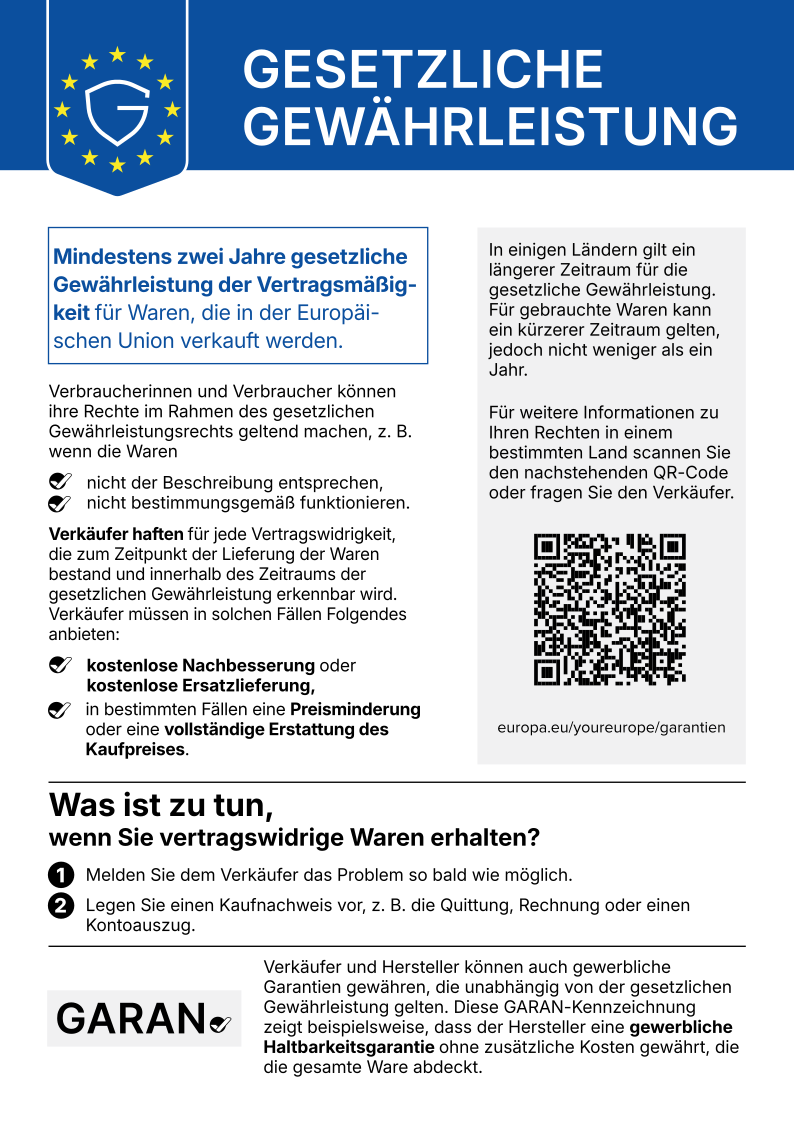

Informationen zum Kauf bei MA-Shops
Bestellungen bei MA-Shops sind jederzeit möglich und werden innerhalb von 2-4 Arbeitstagen verschickt.
Ein über die MA-Shops abgesicherter Kauf findet niemals außerhalb von MA-Shops statt.
Bestellen Sie sicher online mit dem MA-Shops Warenkorb.
Vielen Dank.
Ein über die MA-Shops abgesicherter Kauf findet niemals außerhalb von MA-Shops statt.
Bestellen Sie sicher online mit dem MA-Shops Warenkorb.
Vielen Dank.
|
Vertrag widerrufen Verkäufer-Startseite | 0Warenkorb | AGB | Impressum | MA AGB | Datenschutzerklärung | Garantie | MA-Shops Neuzugänge Copyright ® 2001-2026, MA-SHOPS Muenzen All Rights Reserved. Designated trademarks and brands are the property of their respective owners. |